

Jesus and Ukrainian Cultural Identity
How Faith Becomes Part of a Nation's History
Ukrainian icon painting is a particularly interesting example of this relationship.
Christianity has played an important role in Ukrainian cultural history for more than a thousand years. Throughout this period, Ukrainian artists developed distinctive approaches to sacred painting while remaining connected to the broader traditions of Eastern Christianity.
Different regional schools of icon painting emerged, including those associated with Lviv, Sambir, Przemyśl, and Zhovkva. These schools demonstrate that Ukrainian sacred art was not simply an identical reproduction of Byzantine models. Instead, it developed through interaction between inherited religious traditions and local artistic influences.
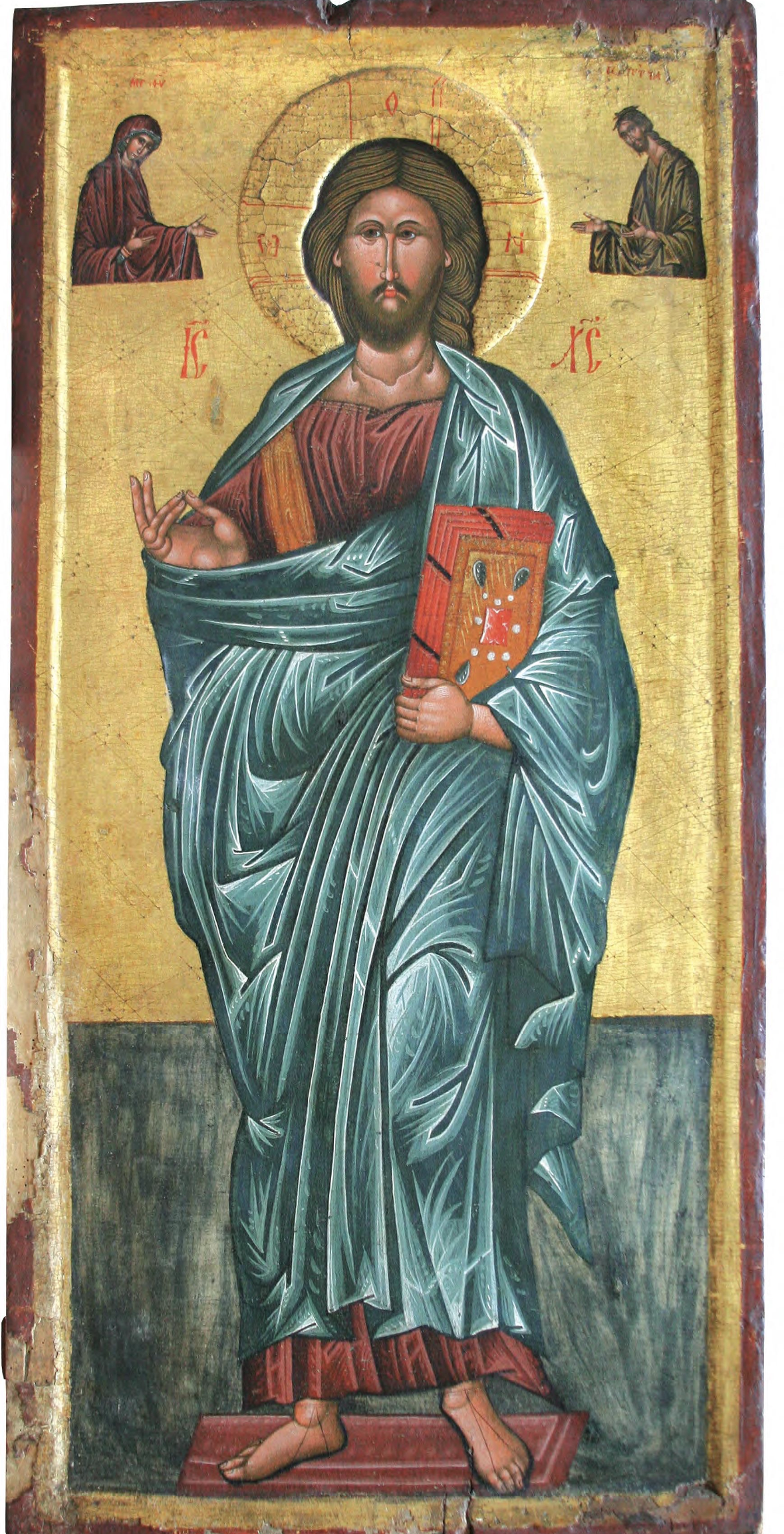
An interesting example is a fifteenth-century Ukrainian icon of Christ Pantocrator, originally associated with the Church of the Dormition in Vovche, near present-day Przemyśl, Poland. Christ is shown standing and blessing the viewer while holding a book containing a passage from the Gospel of John.
The image follows recognizable Christian iconographic traditions, yet it also belongs to a particular regional and historical context.
This raises an important question: when a community creates an image of Jesus, is it only representing its religious beliefs, or is it also expressing something about its own identity?
I think the answer can be both.
For Ukrainian communities, icons have historically been connected not only to religious worship but also to churches, family traditions, artistic heritage, and cultural memory.
This becomes especially meaningful when considering the destruction and displacement of cultural heritage during periods of political conflict and war.
As someone from Ukraine, I find this aspect of religious art particularly personal. I see these images not only as representations of Jesus but also as evidence of how faith has been preserved and expressed across generations.
Ultimately, Ukrainian iconography demonstrates that representations of Jesus can carry both theological and cultural meaning. The image remains recognizable as Christ, but the artistic tradition through which He is represented tells us something about the people who created it.
Create Your Own Website With Webador