

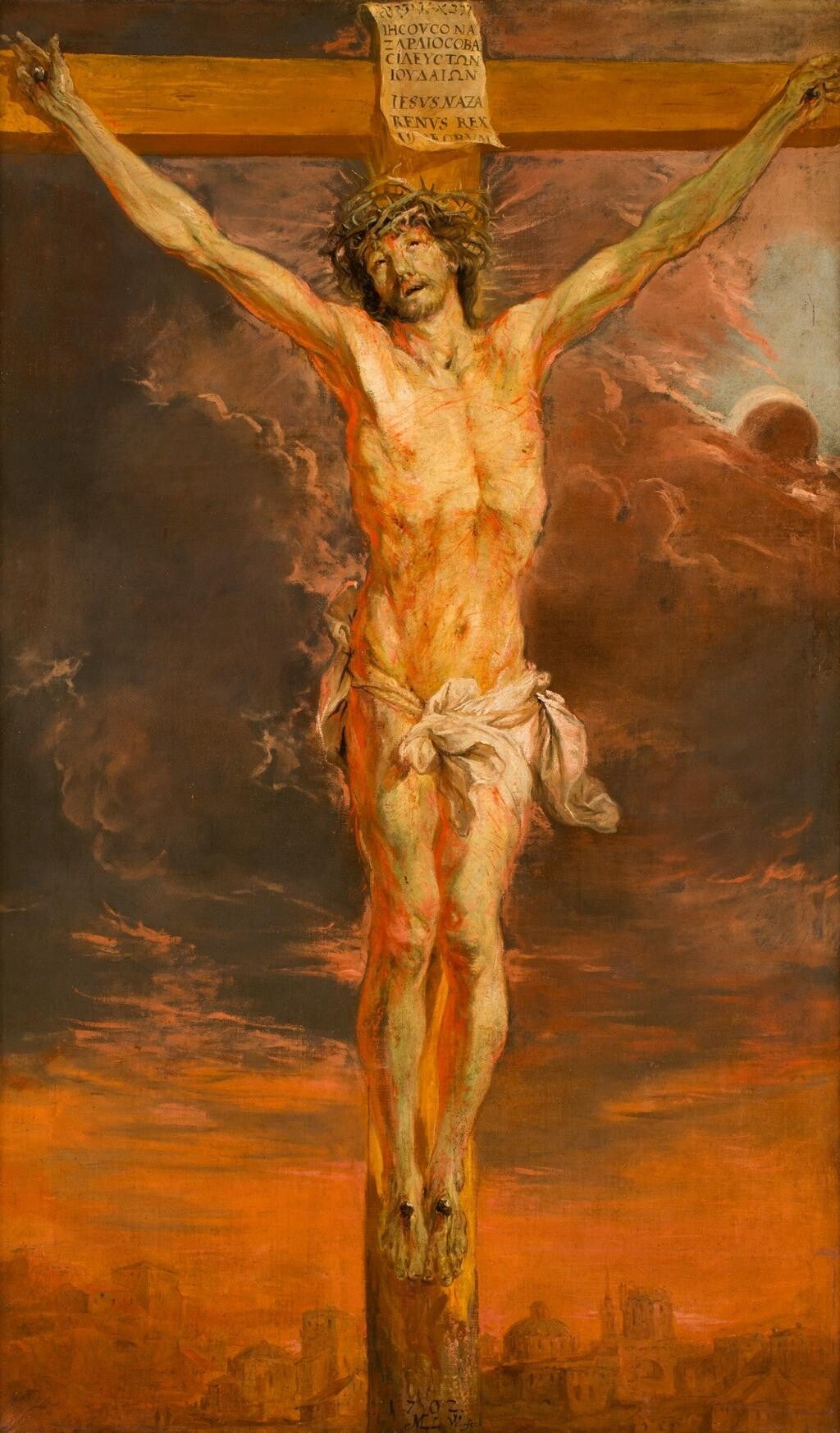
Jesus the Suffering Saviour
The Humanity and Sacrifice of Christ
While Christ Pantocrator emphasizes Jesus' divine authority, crucifixion paintings often present a very different image. Here, Jesus is not shown as a heavenly ruler but as a human being experiencing suffering, vulnerability, and death.
One example is Michael Willmann's Christ on the Cross, painted in 1702 for the Abbey Church in Lubiąż, in the historical region of Silesia. Willmann was an important Baroque painter, and his work belongs to a tradition that frequently used dramatic religious imagery to encourage emotional engagement.
The crucifixion has a central place in Christian theology because it represents Jesus' sacrifice and the belief that salvation comes through His death and resurrection. However, the visual interpretation of this event can vary considerably.
Some crucifixion images emphasize the physical suffering of Jesus, drawing attention to His wounded body. Others emphasize His composure, dignity, or victory over death.
What I find especially interesting is how differently these images invite the viewer to respond compared with Pantocrator icons. Rather than emphasizing distance and majesty, the crucifixion encourages reflection on pain, sacrifice, and compassion.
This also connects to the Christian belief that Jesus is both fully divine and fully human. While the Pantocrator image highlights His divinity, the crucifixion makes His humanity impossible to ignore.
Create Your Own Website With Webador