

Jesus the Divine King
Christ Pantocrator and the Image of Divine Authority
One of the most recognizable images of Jesus in Eastern Christian art is Christ Pantocrator, a Greek title commonly translated as “Christ the Almighty” or “Ruler of All.” This representation has played an important role in Byzantine and Eastern European Christianity, particularly in Orthodox and Eastern Catholic churches.
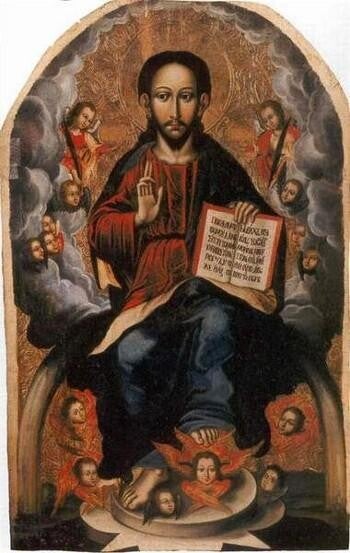
In these images, Jesus is usually shown facing the viewer directly, often holding a Gospel book and raising His other hand in blessing. His expression is solemn, and the composition communicates authority rather than movement or ordinary human emotion.
An important Ukrainian example is Yov Kondzelevych's Christ Pantocrator, painted between 1698 and 1705. Originally created for the iconostasis of the Maniava Skete Monastery, the icon presents Jesus holding an open Gospel and blessing the viewer. The gilded background, decorative frame, and surrounding sacred figures emphasize His divine identity.
The Pantocrator icon constructs Jesus primarily through His divinity. His stillness communicates power, while His blessing suggests that His authority is also connected to His relationship with humanity.
I find this especially interesting because the Gospels present Jesus in several different ways. He is a teacher, a healer, a suffering human being, and the Son of God. Yet an artist cannot communicate every aspect of His identity equally in one image.
Create Your Own Website With Webador